
When Children Feel Big Things and Small Words Are Not Enough
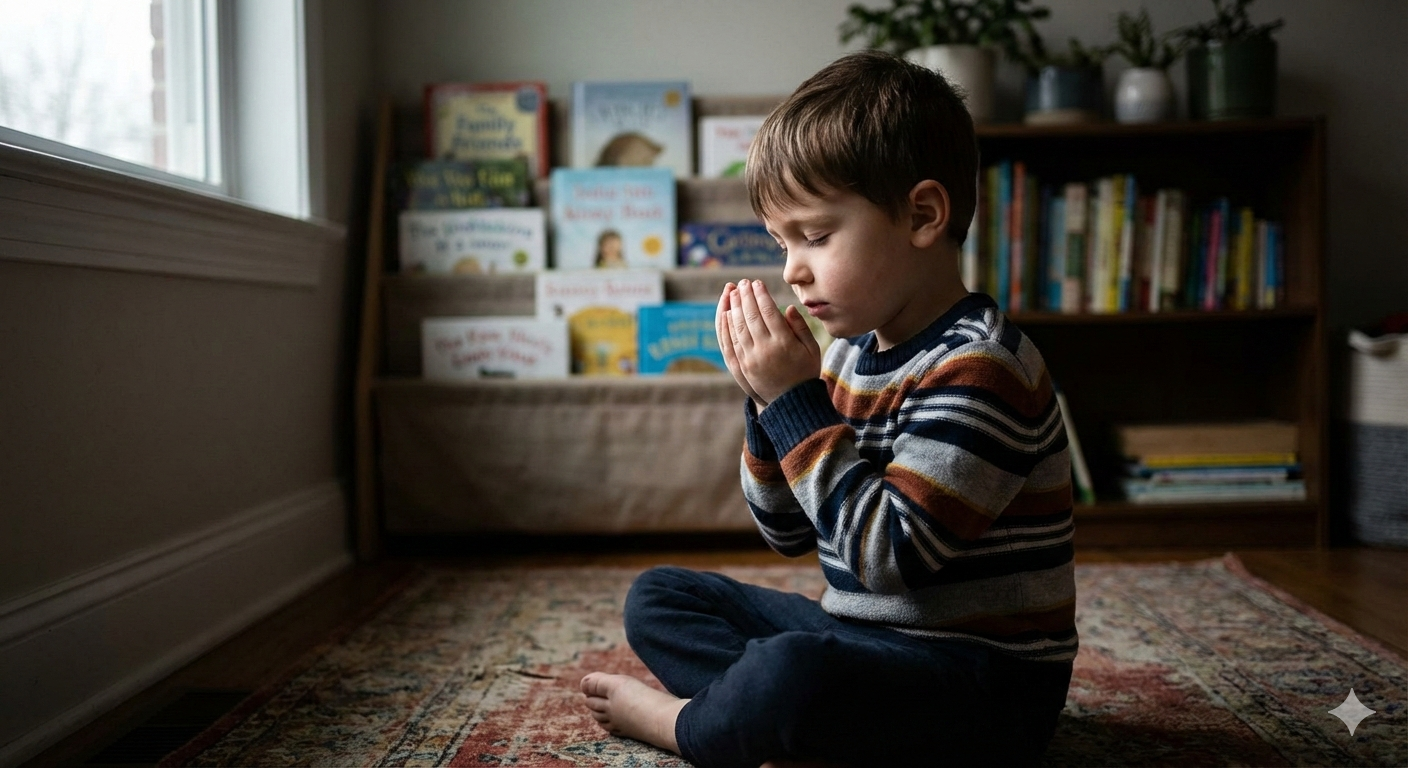
Children feel deeply. Far more deeply than we often give them credit for.
They feel disappointment when a friend pulls away. Fear when something changes. Jealousy, they do not yet know how to name. Sadness that sits heavy in their chest with no clear reason. Hope that feels too fragile to say out loud. Gratitude they do not know how to express without awkward smiles or silence.
And then we ask them the impossible question.
“What’s wrong?”
Most of the time, they do not know. Not because they are hiding something, but because the feeling arrived before the language.
As adults, we forget how long it took us to learn emotional vocabulary. Children are still building the bridge between what they feel and what they can say. Until that bridge is strong, emotions often come out sideways. Tears over small things. Anger that seems sudden. Withdrawal. Silence. Defiance. Or the classic “I don’t know.”
What they are really saying is: I feel something big, and I don’t have the words for it yet.
Feelings Are Not the Problem
The problem is having nowhere to put them.
In schools and homes, we often focus on behaviour. We manage reactions. We correct tone. We address outcomes. All of that matters. But underneath behaviour is almost always an unmet emotional need.
Children do not need to be taught to feel less. They need to be taught where to place what they feel.
This is where faith quietly becomes a refuge.
Not as a lecture. Not as a rule. But as a language.
Dua as Emotional Language
For a child, dua can become the first safe container for feelings that feel too big to carry alone.
When they are afraid but cannot explain why.
When they are hurt but do not want to talk.
When they are hopeful but scared of disappointment.
When they feel gratitude and do not know how to express it.
Dua gives them permission to speak without performing. To ask without sounding foolish. To complain without being rude. To hope without guarantees.
It teaches them something profound very early in life: you are allowed to bring your whole heart to Allah, even the messy parts.
A child who learns this does not need perfect emotional literacy right away. They have a place to go while they are still learning.
What Happens When Children Are Given This Outlet
Something subtle but powerful shifts.
They begin to pause instead of explode.
They reflect instead of react.
They learn that vulnerability is not weakness.
They realise they are not alone with what they feel.
Over time, dua becomes less of a memorised phrase and more of an instinct. A quiet turning inward. A moment of grounding. A habit of hope.
This is not something that shows up on report cards. But it shows up everywhere else.
In resilience.
In confidence.
In emotional safety.
In the way a child carries themselves through difficulty.
Our Role as Adults
Children do not learn this from instructions alone. They learn it from what they see us do with our own big feelings.
Do they see us rush to solutions, or pause and turn to Allah?
Do they see us model sincerity, or only structure?
Do they hear dua only at set times, or as a natural response to life?
When dua is woven into daily moments, joy, stress, uncertainty, gratitude, it stops being something children perform and starts becoming something they rely on.
A Thought to Carry Forward
If we want children to grow into adults who are emotionally grounded and spiritually connected, we must give them tools that meet them where they are now.
Sometimes, words fail them.
But turning to Allah never has to.
In our next reflection, we will explore the power of dua itself and how teaching it intentionally can shape hearts long before children have the words to explain what they feel.
Quietly. Gently. Effectively.
This is the work of Tarbiyah.