
The Power of Duʿā: The Weapon of the Believer
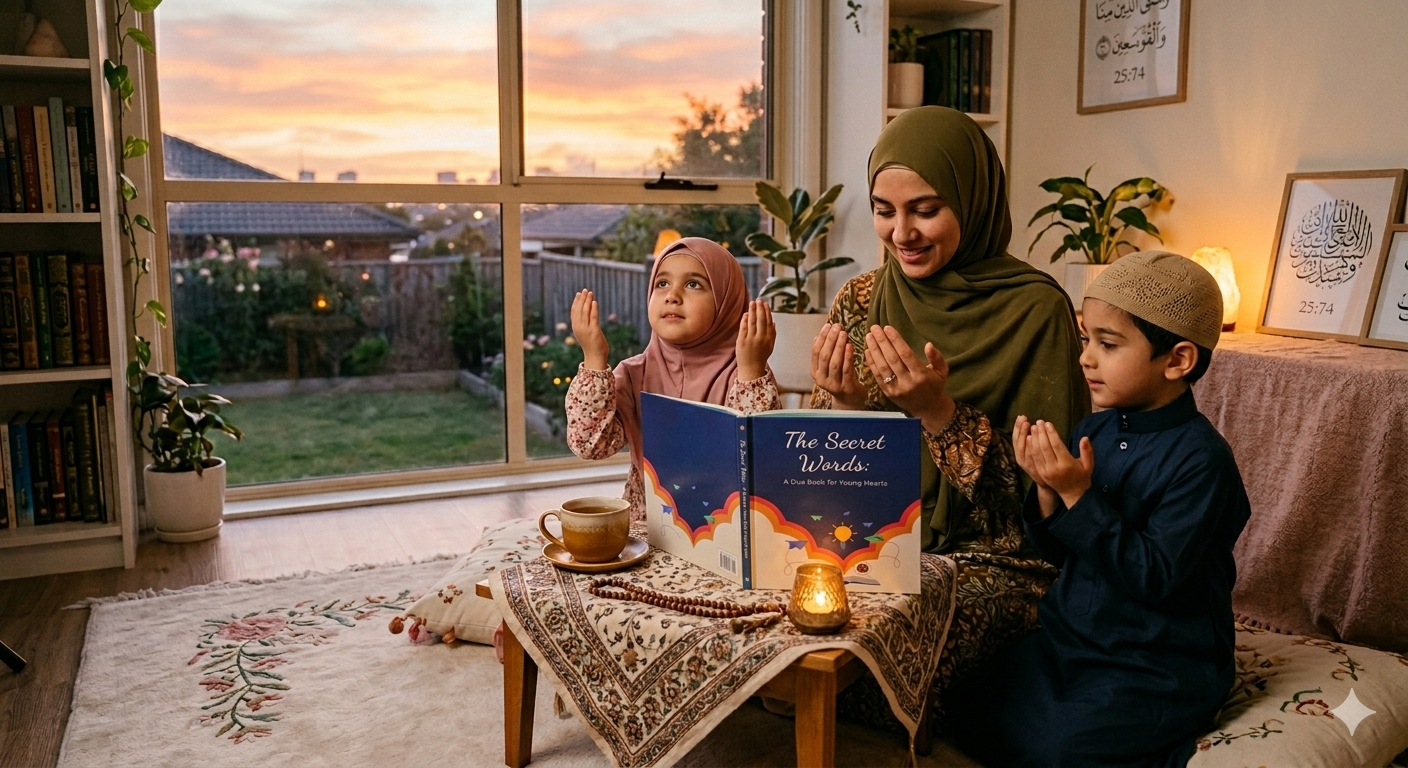
In the fast pace of our daily lives, filled with school runs, endless to-do lists, and constant noise, there lies a timeless tool that connects us directly to the One who controls everything: duʻā (supplication).
1. Duʻā: The Heartbeat of a Believer’s Life
The Prophet ﷺ said, “Duʻā is the weapon of the believer, the pillar of faith, and the light of the heavens and the earth.” When we raise our hands, we are not only asking for help, we are admitting our dependence on Allah and reaffirming our faith that nothing is beyond His power.
From the moment a mother whispers a duʻā for a righteous child in her womb, duʻā remains the thread that ties generations to Allah. It is the believer’s constant companion through every stage of life.
2. Parenting Through Duʻā
In Islamic history, some of the greatest examples of parenting began with duʻā. Prophet Zakariyyā (ʿalayhi as-salām) called out to Allah for righteous offspring, and his sincerity was answered with the gift of Yaḥyā. Likewise, the mother of Maryam turned to Allah before her daughter was even born. These stories remind us that parenting does not begin at birth; it begins with duʻā.
From a psychological perspective, when parents practice sincere duʻā, it cultivates a home environment of peace and hope. It teaches children emotional strength, patience, and reliance on Allah. In a world where anxiety and uncertainty are common, raising children who find comfort in Allah’s remembrance builds deep emotional resilience and faith-driven confidence.
3. A Home Remembered by Allah
A household filled with dhikr, the remembrance of Allah, becomes a sanctuary for the soul. The Prophet ﷺ said that the example of the one who remembers Allah and the one who does not is like the living and the dead. Imagine the spiritual light that fills a home where parents say bismillāh before every action, where Qur’an is recited daily, and where duʻā is made not just in hardship but also in gratitude.
Children who grow up in such homes carry that remembrance with them into every part of their lives. When they see their parents turn to Allah for both big and small matters, they learn that reliance on Allah is not weakness; it is strength.
4. Teaching Our Children the Language of Duʻā
Just as we teach our children to read and write, we must also teach them to call upon their Lord. Encourage them to make duʻā before sleeping, after salah, or even before a test. Ask them, “What do you want to ask Allah for today?” This question nurtures both faith and self-awareness.
When duʻā becomes a daily habit, it transforms a child’s worldview. They begin to view Allah as an active, loving presence in their life rather than a distant concept.
5. A Tool to Strengthen Our Family Bond with Allah
Families that make duʻā together grow closer, both spiritually and emotionally. It can become a nightly ritual, a safe space where everyone’s worries are lifted and replaced with trust. The Qur’an tells us that the believers say:
“Our Lord, grant us from among our wives and offspring comfort to our eyes and make us an example for the righteous.” (Qur’an 25:74)
What a beautiful reminder that the ultimate comfort of the heart is a family united by duʻā and righteousness.
Continue the Journey: The Secret Words: A Duʻā Book for Young Hearts
To help families nurture this beautiful practice, we have created a special book filled with meaningful duas, reflections, and engaging activities for children. It is designed to make remembrance a part of everyday family life, whether before school, at bedtime, or during quiet moments of gratitude.
Click here to get your copy of The Secret Words: A Duʻā Book for Young Hearts
Let us raise a generation that turns to Allah in every season, not only when life is difficult but every single day, in shā’ Allāh.